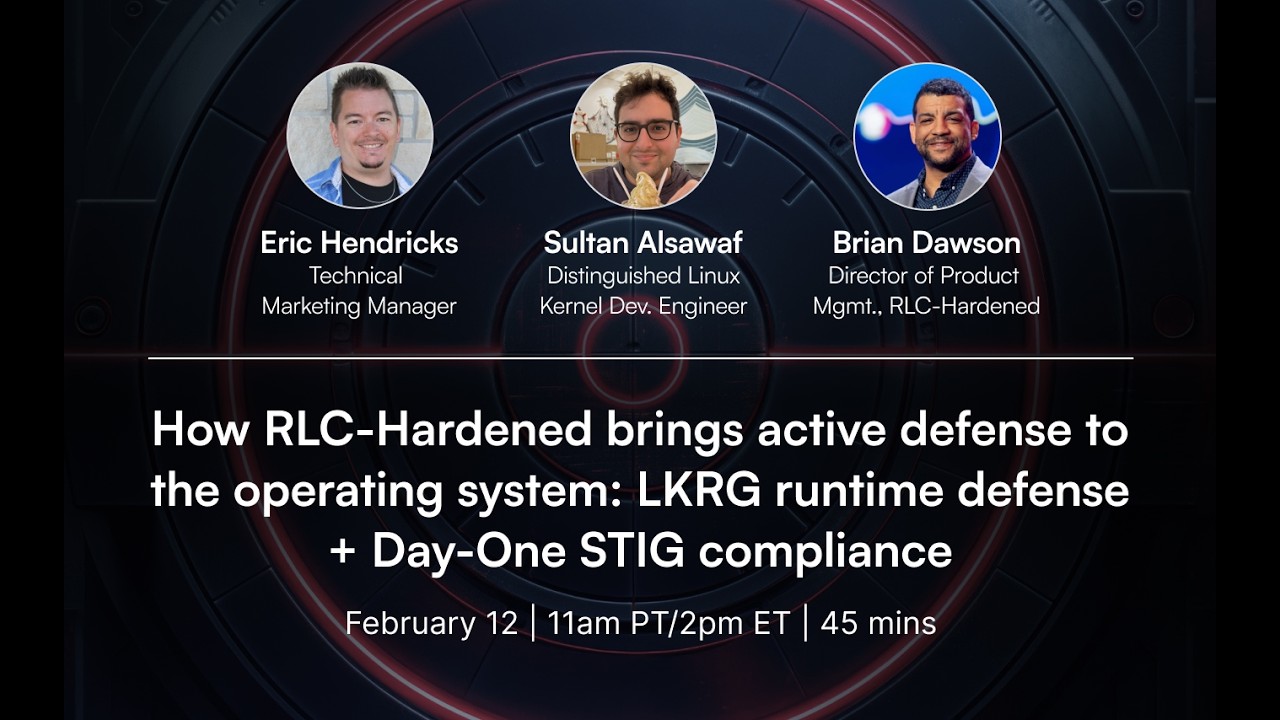

Proactive Linux Security: How RLC Hardened Goes Beyond Patching
Reactive security is table stakes at this point, and it is not keeping up. I sat down with Nathan Blackham, Brady Dibble, and Sultan Alof from CIQ to talk about what it actually looks like to build defense into the operating system from day one.
The conversation started with something that hits close to home for anyone managing Linux at scale: CVE volume has exploded. The Linux kernel became its own CVE numbering authority a few years back, which means every commit gets evaluated for security relevance. That is good in theory, but in practice it means patching has become a near full-time job, and mission usually wins when you have to choose between a reboot window and keeping production up. Brady put it plainly: compliant and secure are not the same thing, and the gap between them is where things go wrong.
That is the whole premise behind RLC Hardened. It ships with a set of code-level changes designed to close off entire attack vectors before a CVE even exists for them. That includes a hardened glibc build, hardened malloc, tightened OpenSSH that drops the XZ library linkage after startup, stronger password hashing via yescrypt, and a few other targeted modifications. The gold image comes out at 95% STIG compliance on day one, which is an actual measured number, not marketing copy.
The standout piece is LKRG, the Linux Kernel Runtime Guard. Sultan walked through how it works and it is genuinely different from anything else in this space. Rather than scanning for known exploit signatures, it watches for the end goal of an exploit, things like a process claiming root credentials it never earned through legitimate channels. The demo showed it killing an exploit attempt cold, and the performance overhead is around 2.5%, which is low enough that most workloads will not notice it. It also ships signed for secure boot, which matters a lot in regulated environments.
If you are running Linux in production and security compliance is part of your world, this one is worth your time. Subscribe to The IT Guy Show on YouTube and follow along at itguyeric.com for more.