LFNW 2026

LinuxFest Northwest 2026: Worth the Trip

I made it to Bellingham this spring for LinuxFest Northwest, and I get why this event has been earning its reputation for 27 years.

This is not a conference where corporations show up to scan badges and hand out tote bags. No lead capture, no forced networking. Just a few hundred people who actually care about Linux, gathered in a walkable waterfront city on a genuinely beautiful spring weekend. The crowd skews toward students, hobbyists, longtime contributors, and the kind of sysadmins who have strong opinions about their chosen terminal emulator. The conversations are real, and the community is tight.

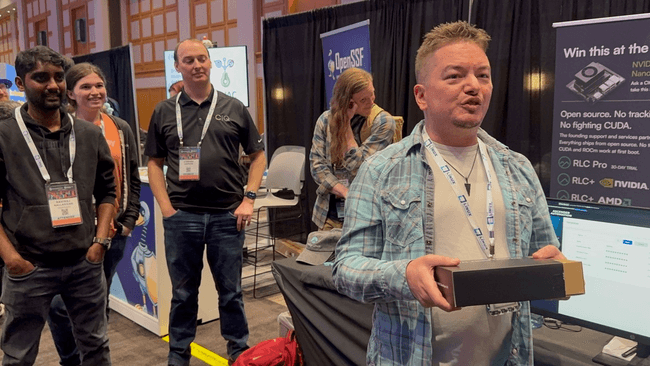
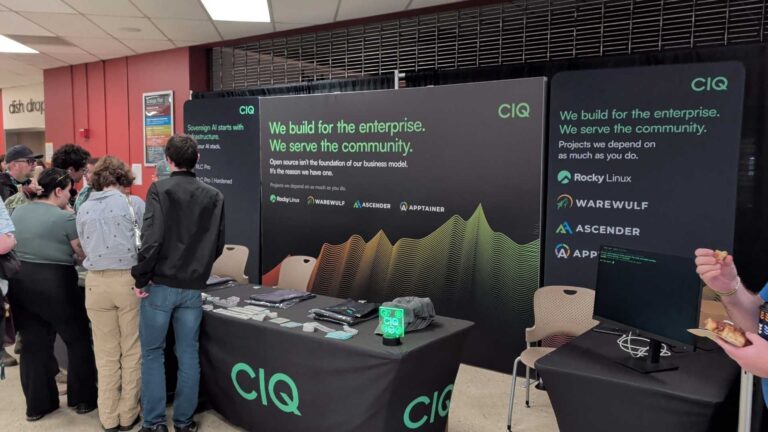
I was there representing CIQ and the Rocky Linux project alongside R. Leigh Hennig, one of Rocky’s cofounders, and a few others from the CIQ team. Having people who are genuinely part of the project made a difference on the floor. We talked migrations, automations, home lab setups, and what people are actually running in production. Good questions from people who know their stuff.

The social side matched the rest of it. Friday night at Beach Cat Brewery brought together folks from RESF, Microsoft, Fedora, CentOS, and a mix of attendees and volunteers. Saturday was dinner at Brandywine Kitchen and drinks at The Den. The kind of cross-community connection that does not happen on Slack.

I gave a talk called “Escaping the End-of-Life Nightmare: Lessons from the Linux Graveyard,” aimed at anyone who has ever inherited a server running something two major versions past EOL. It drew around 25 people and led to some good conversations afterward. When the recording goes up I will share it here.

If you have never been to LFNW, put it on your list. Bellingham is a great place to spend a spring weekend, and the community there is worth showing up for.

How to maximize the throughput of your AI infra

From Fresh Install to AI Inference in Under 4 Minutes

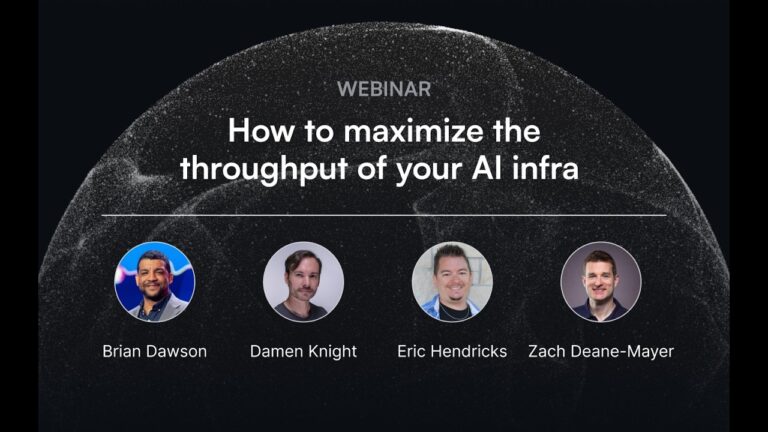
Getting a GPU box ready for AI workloads is way harder than it should be, and we proved that live on the CIQ Webinar Series on April 2nd.

I brought in Brian Dawson from CIQ product management, Damon Knight (CIQ’s resident AI nerd and automation engineer), and Zach from AI Insight Solutions for an honest conversation about where most organizations actually are when it comes to GPU infrastructure. The short answer: a lot of people started on cloud, found it expensive, bought hardware, and are now figuring out that running AI on prem is a whole different problem.

The demo said everything. We ran a fresh Ubuntu setup through the full stack, including Nvidia drivers, CUDA, the CUDA toolkit, cuDNN libraries, and PyTorch, with Damon copy-pasting commands he spent months refining. Time to first inference: around 13 and a half minutes, and roughly 10 of those were just prerequisites. Compare that to RLC Pro AI, which ships with the validated stack already baked in. Same hardware, same demo code, first tokens in about 3 minutes and 30 seconds.

What makes that difference real at scale is validation. It is not just that the stack installs faster. It is that CIQ actually tested the dependency combinations, recompiled PyTorch with the right flags, and confirmed the GPU is doing the work instead of silently falling back to CPU. Damon’s point about checking Nvidia SMI and seeing 0% GPU utilization hit close to home for anyone who has been there.

If you are building or managing AI infrastructure, this one is worth watching.

Subscribe to The IT Guy Show on YouTube and follow along at itguyeric.com for more Linux, open source, and infrastructure content.

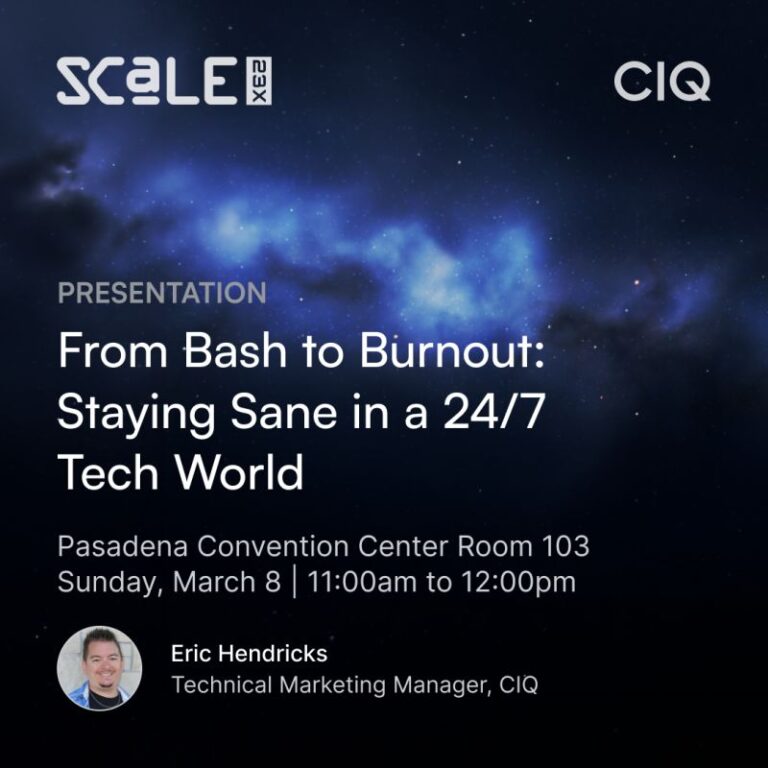
Tech Burnout Recovery: What I Shared at SCaLE 23

This one was personal. I gave this talk at SCaLE 23 in Pasadena as part of Open Source Career Day, and I will be honest, I almost did not write it because it meant putting some very uncomfortable things on a slide.

In 2025 I lost a job I had held for five and a half years in a seven-minute call. Over the next 96 days I worked overnight shifts at a gas station, interviewed on no sleep during what should have been my sleep hours, and spent a lot of time figuring out who I was when the job that had become my identity was gone. I also said yes to teaching Linux administration at Johnson County Community College, which I almost turned down, and eventually landed at CIQ. Both of those came through my network, not job boards.

The talk covers what burnout actually looks like before you realize you are in it, the patterns that get technical people there faster than most, and some practical steps I used to stabilize and rebuild. I talk about the hero trap, context switching, the identity trap, and what a blameless postmortem on my own situation taught me. There is also a question I started asking people in my life that has saved me more arguments than I can count, and I share it in the talk because it is genuinely that useful.

This is not a polished keynote. The slide deck had some technical issues live, I was processing some heavy personal news the morning of the talk, and it shows. But I think that is part of why it landed the way it did.

Watch the full talk on YouTube: From Bash to Burnout | SCaLE 23 Open Source Career Day

Sustainability is one of the most important skills you can build in this industry. Reliability requires maintenance, and that applies to people too.

SCaLE - Bash to Burnout

From Bash to Burnout: My SCaLE 23x Talk

I gave this talk at SCaLE 23x in Pasadena as part of Open Source Career Day, and it is probably the most personal thing I have ever put on a stage.

2025 was a hard year. I lost a job I had tied my entire identity to, spent 96 days working overnight shifts at a gas station, and went through some personal upheaval I was not prepared for. I did not plan to turn any of that into a conference talk. But when I was asked to speak, it felt dishonest to stand up in front of a room full of sysadmins and IT folks and pretend I had it all figured out.

The talk covers what burnout actually looks like before you realize it is happening, the patterns that lead there, the signals I missed in my own life, and some practical things that genuinely helped. Not productivity hacks. Real stuff, like building a daily rhythm when everything falls apart, maintaining a few relationships with no agenda, and learning to separate your identity from your employer before a reorg does it for you.

I also talk about what I did right after the layoff and what I would do differently. Spoiler: I should have taken time to grieve before immediately hunting for the next thing.

If any of this sounds familiar, the recording is worth 40 minutes of your time.

Burnout is not a personal failing. It is a warning sign. I needed someone to say that to me in 2025, so I figured I would say it to a room full of people instead.

Webinar Linux Tradeoffs

Ending the Linux Tradeoff: Enterprise Features on Community Linux

I hosted this solo webinar for TuxCare making the case that you do not actually have to choose between community Linux and enterprise-grade support. The whole pick-a-camp framing is a false choice, and that is what the session is built around.

The first half covers why community distributions like AlmaLinux and Rocky Linux are increasingly showing up in production environments, and what the real concerns are when they do. Not just licensing costs, but patching velocity, compliance requirements like FIPS and FedRAMP, supply chain integrity, and what it actually costs your team to be the only ones on call at 2 a.m. Free software is not free if your people are the support contract.

The second half gets into how TuxCare Enterprise Support, KernelCare, Radar, and the Endless Lifecycle Support offerings layer onto a community distribution to address those concerns without locking you into a commercial vendor’s opinionated build. I also walked through rebootless patching in some detail since it comes up constantly and deserves a real explanation rather than a marketing bullet point.

The Q&A covered RHEL to AlmaLinux migration paths, FIPS compliance across version upgrades, and what to do if you are still running CentOS 7. My answer on the last one was only partially a joke.

Watch the full webinar on YouTube: Ending the Linux Tradeoff

This webinar sits at the center of what I do: translating real infrastructure concerns into a conversation that makes sense to both the sysadmin in the room and the person signing the budget.

Commercial vs Community

AlmaLinux Enterprise Support: TuxCare Webinar with Benny Vasquez

I hosted this webinar for TuxCare with Benny Vasquez, chair of the AlmaLinux OS Foundation. We covered a lot of ground in about an hour, and honestly the pre-show conversation was just as good.

I hosted this webinar for TuxCare with Benny Vasquez, chair of the AlmaLinux OS Foundation. We covered a lot of ground in about an hour, and honestly the pre-show conversation was just as good.

The core thread running through the whole thing was a question worth asking before you ever pick a Linux distribution: is this actually a strategic decision, or are you just grabbing whatever you know? Benny made a point early on that landed well: when you choose your distro, you need to understand what’s driving the organization behind it, because if that organization shifts priorities or disappears, so does your stability plan. That reframed the conversation from package managers and command sets to long-term infrastructure thinking.

We got into the AlmaLinux Foundation structure, how it was built specifically so the project can never be bought or sold, what the day-to-day looks like for a volunteer-driven distribution at enterprise scale, and how TuxCare’s enterprise support fits alongside a community distro like AlmaLinux. We also covered hardware support extensions in AlmaLinux 10, the CentOS 7 migration path, and what Benny called the goal: pick AlmaLinux and then not have to think about it again.

The tangents were good too. Benny’s WordPress story hit close to home.

Watch the full webinar on YouTube: AlmaLinux Delivers Security, Performance, and Open-Source Freedom

Hosting technical webinars with community leaders is one of the things I genuinely enjoy. Getting someone like Benny to think out loud in front of an audience produces better content than any script would.

I had the pleasure of speaking at the Kansas City DevOps Meetup in downtown Kansas City! It was kind of like a coming home party. KC DevOps Days is where I got my start at GitLab and set me on a path towards a career I never imagined possible. This event, in the vault of the downtown library was my chance to share GitLab’s story to my local meetup. It was well received and even led to an impromptu demo of the GitLab product!

In the IT Industry, many incidents have been misunderstood or blown out of proportion due to poor handling of communications during and right after a crisis arises. The how, when, and how much communication can be the difference between a media frenzy and an outage that people work through and forget about. Ever since a database outage in January of 2017, companies and contributors have received timely and effective communication from Gitlab.

I gave my Busting Open Source Security Myths talk at DevSecOps Days Denver to a packed out auditorium. If was so well received, I decided to bring it back for Day 2 of SELF 2019!

Developers are constantly being asked to make more and more powerful applications. The more feature-rich the application, though, the more prone to risk it becomes. Many have thought the solution is to keep the code base locked up tight, that open source is undesirable. The truth, however, is quite the opposite! More eyes on code has proven to increase the quality and security of the modern application.

This talk defined the voice of the IT Guy for me. This was the moment when the Sudo Show got its wings, when I realized that I was on the right track towards re-inventing my career. I had people in the room I respected a great deal nodding along in agreement. This was where it REALLY started for me.

So, you are interested in technology, you want to contribute to something bigger than yourself, you can’t wait to join a global community…but where do you start? Is coding the only way in? Let’s take a practical look at how to go from consumer to contributor!

South East Linux Fest 2019 was an amazing test of the IT Guy…not as a brand but as the person I wanted to be in my career. I gave 3 talks in 3 days and spent a lot of time chatting with different folks, sharing stories, answering questions. It challenged my introverted nature and my public speaking skills.

The entire conference was an amazing experience that I will always cherish!

Now more than ever, developers have more tools to pick from than hours in the day. It is so easy to spend more time maintaining the development pipeline than it is actually developing. What if the planning, coding, building, testing, and deployment could all be handled from one tool in one interface? Well it can! Gitlab can cut down on tool chain bloat and decrease cycle times!

Getting started in my career, I never imagined I would work in sales or go speak at conferences! I was very nervous and I think that showed. What was worse is I had the first breakout after lunch and the next room was a dive into chaos engineering! I learned a LOT from this event and later revamped my talk to present to the DevOps meetup in Kansas City.

In the IT Industry, many incidents have been misunderstood or blown out of proportion due to poor handling of communications during and right after a crisis arises. The how, when, and how much communication can be the difference between a media frenzy and an outage that people work through and forget about. Ever since a database outage in January of 2017, companies and contributors have received timely and effective communication from Gitlab.

The conference now seems like SO long ago! It was 4 crazy-packed days (plus 2 on the road) but it would not be overstating anything to say it has forever changed the course of my career.


The morning was meetings surrounding GNOME Engagement and getting thoughts and lessons learned ready for LAS2019! Being someone who has Linux, IT support, LED lighting design, live audio, photography and videography basics all crammed into my head, I could be a huge asset to conferences all over the country! It would seem to be time to get myself onto committees for more conferences.


The other realization I had was this conference is going to cost me a lot more money than just the travel expenses! I fell in love with talks about Purism’s Librem 5 phone and the whole of System76 and their efforts to manufacture the laptops and desktops in house to better support their products. I am sure in the next couple of years, as budget allows, both companies have already earned my business.


After a tour of System 76 and another cook-out, it was time to pack up and get ready for the 9 hour drive home to Kansas City the next day. I am looking forward to the upcoming changes I hope to make to my career: develop more in depth content on this blog, start a podcast/YouTube channel, become involved with projects too small to really promote themselves, attend conferences, and help others discover the passion and community behind open source!

Oops! The downside to staying up pretty much all night talking about FOSS, life, and everything else under the sun is that the next morning comes WAY to quickly!


So, after going to one of the local malls to buy a long sleeve shirt and picking up some food, I finally managed to get to the venue. As I alluded to in my previous post, I spent more time thinking about people and community than the technology that drew me to the conference in the first place. Probably the biggest example of this was a talk by Britt Yazel surrounding Scientists and open source.


What could be better than a Linux-powered science computer? Its more secure, more stable, faster than the other platforms…but the problem? Lack of packages and supporting libraries to carry out complex scientific analysis! What’s worse is that universities, research facilities, and science labs and stuck running Windows and a few proprietary applications that charge thousands of dollars per license per year!!! That is literally millions of US Dollars…tax payer money… being paid to a couple of businesses that have a corner on the scientific market! Now that bugs me on a number of levels!


We as an open source community need to branch out. We need to shake this nerd in their parent’s basement stigma we have carried for so many years, get out there, find needs, and build solutions to fix those needs! Instead of idling in IRC rooms waiting for some project we can bash, we should be out there fixing problems in our world!


After a though-provoking afternoon, we all met up for pizza and celebrated the release of GNOME 3.30 and followed that up with some vintage arcade games 🙂

I know, I know this is a lot later than I promised.


That is what happens when you go to a conference then come back to the real world…It seems to take a week of preparation before you leave and a week of preparation after you get back from any break to really get back in the swing of everything. Anyway, I digress…


So, its Day 2 of the conference. After an overwhelmingly awesome first day, everything sort of settled into a rhythm. We got the technical bugs worked out and started adding in lightning talks! (I think next conference I will have to sign up for one.)


The talks were amazing. We heard from KDE about their application deployment strategy and their application ecosystem. However, the not-as-technical talks is what really grabbed my attention. I was really surprised to be honest, I expected I would dive deep into technology on this trip… Not so much! Instead, I found myself drawn towards a few talks in particular:


The first was a pair of talks from Ryan Gorley, owner of FreeHive an open source graphics design agency. He talked about the need for innovation beyond Adobe Cloud and the needs of creatives from Desktop Linux and the accompanying application ecosystem. There were a pair of talks from Elementary as well discussing their attempts to monetize open source to allow developers to actually make money off their work!


However, I think the talk that I engaged with more than any of Day 2 was a talk about making open source attractive to students. Heidi Ellis and Gregory Hislop are working to integrate open source into the college curriculum at large but more than that help students fall in love with the FOSS community. Having dealt with the dumpster fire that is /r/Linux (Reddit) and seeing some of the venom of a small minority of the FOSS community, it played back into my thinking about how to introduce students, creatives, and non-technical folks into what the true intent of the open source community really is…


The night continued with Game Night, trivia led by System76’s own Emma Marshal and dinner with different people from the conference. Talks went late into the night…but it was all worth it!

IT IS HERE! Libre Application Summit 2018. This is the first IT conference I have attended since a VMware Summit in 2012.


Not only do I get to listen to some really cool talks…okay, let’s be real. A lot of this is at the edge of my understanding. After all, I am in a room filled with some of the brightest developers from all across the globe. I am just a dumb Sysadmin, haha. It is amazing material non-the-less. I even doubled-down on my usage of Flatpaks.


The venue, Parkside Mansion, is beautiful and the staff have been nothing but accommodating. I fully expected to use my skills and an outgoing personality and as a IT Guy at this conference, however, the one set of skills I didn’t give much thought to was my knowledge of live production. I have been helping get lighting levels right, troubleshooting audio feedback, and helping plan for the future of GNOME conference technological offerings.


While the talks have been interesting, the real call of events like this is to be able to meet and interact with people from all over the world. Within the first 30 minutes of the doors opening, I was able to guide a developer to guys from Elementary OS; the developer was looking to put a mechanism into Flatpak that would allow for end users to donate money back to the developer. Who better for him to talk to than the project that is already trying to do that with their app store?!


I have interacted with people from Red Hat, Endless, KDE, and others. We have discussed American history, Steam gaming on Linux, and solved all of the worlds problems…maybe we’ll tell the world, maybe we won’t.
This conference is starting to sway my opinions on the future of my career. Maybe my time in the deep weeds of code and terminals is coming to a close in the near future to give way towards a focus on people – organizing events, making connections between people, providing a spotlight on growing projects making a difference or in need of help… now that…that sounds like a career to be proud of!


The ladies headed off to a nice dinner up on a rooftop, meanwhile, the guys headed over to the Code Think Air BnB for some grilling, card games, and some amazing conversations: The need for funding the foundations, some history of KDE, and bug tracking horror stories!


Day 2 looks like it’ll be EVEN better!

Kansas City, Missouri to Denver Colorado, 1 Interstate, 609 miles, 8 hours of podcasts… Nothing but rain! However, the nice thing about this road trip was it gave me time to consider a few things about my home lab, my career, you know big things.


I have spent the majority of my career deep in the weeds as a Linux Systems Engineer. I have worked with Red Hat, CentOS, and Ubuntu. The operating system has been my domain for a long time. The problem is, in the past couple of years, the area I have been deriving the most energy from has been the community. This summer, I have been working social media for the GNOME Foundation, made appearances on the Linux Unplugged podcast, helped manage Peer Tube and Gitlab instances. Now here I am on the eve of my first FOSS conference.


Another big decision I made while dodging visibility-killing downpours was how to rebuild my home computer lab. I have been using Digital Ocean to manage services like Quassel and Nextcloud. Part of my responsibilities as a Systems Engineer is to stay on top of trends. Well, for projects to survive the velocity of development these days containers and automation need to be at the heart of all their efforts. To be a responsible Sysadmin, I need to be prepared for that shift. So, I plan on setting up a Kubernetes cluster and running all my home services out of a Gitlab instances into containers!


The last big thought I spent time on was the next step in my education. I am a huge fan of Linux Academy. Learning from their courses is great, but it doesn’t necessarily translate into something industry recognized: IE a certification. The only cert I hold at this point is a RHCSA (Red Hat Certified Systems Administrator) in RHEL6. After this road trip, I hope within the next 3 years to hold my RHCA (Red Hat Certified Architect)!


After a drink and some tacos, its time to hit the sack and get ready for LAS2018 tomorrow!