Why Rocky Linux? Enterprise Linux Built to Last
Why Rocky Linux? Enterprise Linux Built to Last
I wrote this piece for CIQ as a foundational explainer on Rocky Linux, covering where it came from, who is running it, and why the governance structure matters as much as the technology.
The origin story is worth knowing. When IBM acquired Red Hat and CentOS was effectively discontinued as a stable downstream rebuild, Gregory Kurtzer, one of CentOS’s original co-founders, announced a replacement the same day. Rocky Linux was named after his late co-founder Rocky McGaugh, who never got to see what CentOS had become. Within days it was the top-trending repository on GitHub. The community response was immediate and unmistakable.
The post covers what makes Rocky Linux a legitimate enterprise choice beyond just being free: binary compatibility with the Enterprise Linux standard, a governance model specifically designed to prevent what happened to CentOS, and a decade-long support lifecycle that lets infrastructure teams plan without building in forced migrations. It also gets into who is actually running it, not home lab hobbyists, but AWS, Google Cloud, Rakuten Symphony, and Equinix, organizations making serious at-scale infrastructure decisions.
Read the full post on CIQ: Why Rocky Linux? Enterprise Linux Built to Last
Writing foundational content like this is something I enjoy because getting the history and the governance right matters as much as the technical specs, especially for an audience evaluating a long-term infrastructure commitment.
You might also like
SouthEast LinuxFest 2026: Recap
SouthEast Linux Fest has a different feel than most conferences I attend. It is less trade show, more reunion. You run into the same person twice in …
We gave away four NVIDIA Jetson Orin Nanos at Open Source Summit
I put this together for the CIQ blog: what four winners at Open Source Summit 2026 said they would build with an NVIDIA Jetson Orin Nano running RLC …
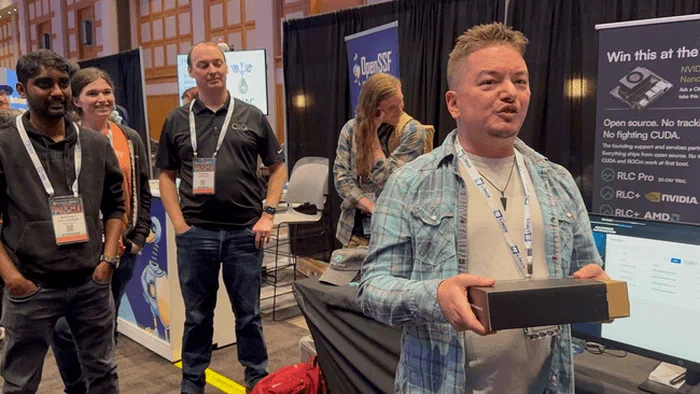
CIQ at Open Source Summit 2026: Minneapolis Recap
I spent three days on the expo floor at Open Source Summit 2026 in Minneapolis with Howard Van Der Wal and Stephen Simpson, and it was one of the …